Llama a+ 86 018059983973
Envíenos un correo electrónicomarketing@gester-instruments.com

¿Qué estándar de probador de compresión y perforación debe utilizar?
Por qué los laboratorios no pueden seleccionar una norma de ensayo adecuada
¿Qué es el probador de compresión y perforación?
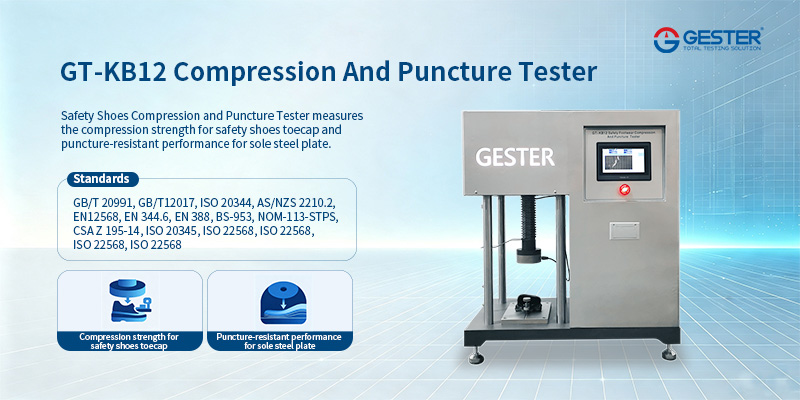
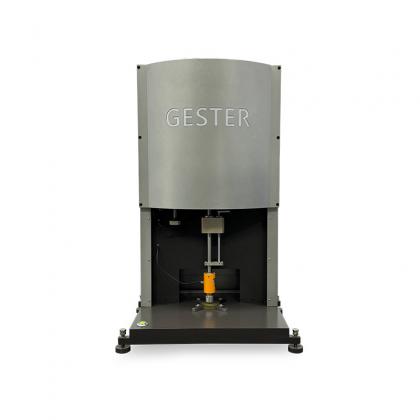
Probador de compresión y perforación para calzado de seguridad es la medida de la resistencia a la compresión de las punteras de los zapatos de seguridad y el rendimiento resistente a la perforación de las placas de acero de la suela después de una carga mecánica estandarizada. Es adecuado para todo tipo de ensayos de compresión de punteras de zapatos de seguridad y ensayos de resistencia a la perforación de placas de acero en suelas, y ayuda a prevenir lesiones accidentales a los operadores en el lugar de trabajo mediante la verificación del rendimiento protector del calzado.
Esta es una prueba de seguridad esencial que es adoptada principalmente por todas las industrias de calzado de seguridad. Además, esta prueba es un requisito principal para la certificación de cumplimiento, como el marcado CE, la certificación ISO y el cumplimiento de la norma GB.
¿En qué se diferencian los principales sistemas normativos?
|
Características |
ISO |
EN |
ASTM |
|
Regiones principales |
Global, Europa |
Europa |
América del Norte |
| Estándar de prueba |
ISO 20344, ISO 20345, ISO 22568 |
EN12568, EN 344, EN 388 |
ASTM F2412 , ASTM F2413 |
Selección por área
Para las industrias de calzado de seguridad que exportan a mercados europeos o globales, ISO 20344 e ISO 20345 son las mejores normas de ensayo de compresión y perforación.
Las industrias que fabrican productos para los mercados de la UE con marcado CE deben preferir las normas de la serie EN para los ensayos. Estas normas son la base directa para la certificación CE.
Para los mercados de Canadá, México, Australia y Nueva Zelanda, se deben seleccionar las normas regionales correspondientes, tales como CSA Z 195-14, NOM-113-STPS y AS/NZS 2210.2, para el cumplimiento local.
Según el tipo de producto
Los zapatos de trabajo diario y el calzado de seguridad para la industria ligera necesitan métodos de ensayo de grado básico para medir su rendimiento de compresión y perforación.
Las botas de trabajo industrial, los zapatos de seguridad para la construcción y el calzado para minería suelen requerir niveles de fuerza más altos y condiciones de ensayo más estrictas debido a sus escenarios de trabajo de alto riesgo.
Para fines de investigación y desarrollo, los laboratorios a menudo comparan las normas ISO, EN y GB/T para la optimización del rendimiento de los materiales.
Estándar global principal: ISO 20344 y ISO 20345
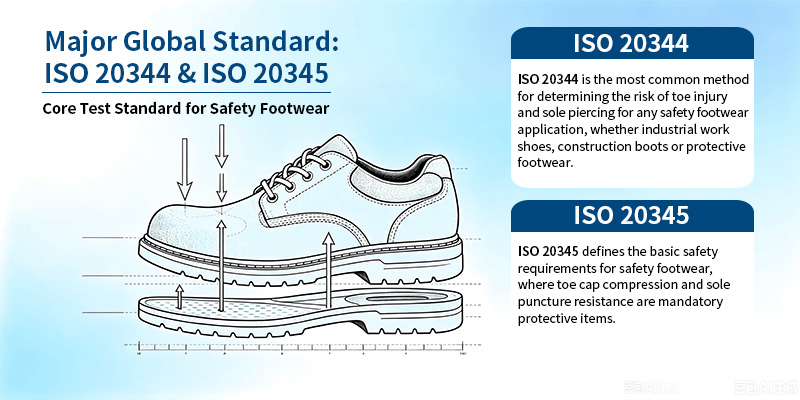
Estándar de prueba principal para calzado de seguridad
La prueba de compresión y perforación especificada en ISO 20344 es el método más común para determinar el riesgo de lesión en los dedos y perforación de la suela para cualquier aplicación de calzado de seguridad, ya sean zapatos de trabajo industrial, botas de construcción o calzado de protección. Los métodos para probar la resistencia a la compresión y la resistencia a la perforación tienen condiciones establecidas. Estas incluyen la velocidad de carga, la geometría de la sonda, la sujeción de la probeta y los criterios de evaluación. Esta estandarización garantiza que los resultados de las pruebas sean similares en todas las instituciones.
ISO 20345 define los requisitos básicos de seguridad para el calzado de seguridad, donde la compresión de la puntera y la resistencia a la perforación de la suela son elementos de protección obligatorios. Además de las normas principales de prueba y de producto, ISO 22568 también proporciona especificaciones suplementarias para la verificación del rendimiento mecánico del calzado de protección.
Importante estatus de las normas de prueba
Ahora la norma de prueba ISO se ha convertido en el estándar de prueba de compresión y perforación más aceptado y preferido. Se utiliza y acepta principalmente en los mercados europeos y en los sistemas de cumplimiento global.
Los laboratorios que utilizan métodos de prueba no estandarizados a menudo se enfrentan a una alta tasa de devoluciones de productos debido a que no pasan la certificación y no cumplen con los requisitos reales de seguridad en el lugar de trabajo.
Simulación de peligros reales en el lugar de trabajo
Este máquina de prueba de compresión de puntera estándar simula parámetros de riesgos mecánicos del mundo real para evaluar el rendimiento protector real del calzado. Este método sigue de cerca los escenarios de riesgo en el lugar de trabajo, como la caída de objetos pesados sobre las punteras y clavos afilados que perforan las suelas en sitios de construcción y manufactura.
Conclusión
La resistencia a la compresión y a la perforación es un parámetro de seguridad fundamental para el calzado de seguridad. En las industrias globales de EPI, este probador de compresión y perforación para zapatos de seguridad es más importante. Es un indicador de seguridad utilizado a nivel mundial que decide si el producto puede proporcionar una protección eficaz a los trabajadores ante riesgos mecánicos en el lugar de trabajo.


Enlaces amigables :
 español