What is the Difference Between
DIN Abrasion Tester vs Taber Abraser for Rubber
Abrasion testing uses standardized abrasive media to evaluate wear‑resistance performance of rubber, elastomers and polymer materials. Understanding DIN abrasion tester versus Taber abraser is important as both follow totally different operational principles and test mechanisms. In this article, you will learn the benefits and pitfalls of DIN abrasion tester versus taber abrasion tester and why the use of one is better than the other for different rubber and material test projects.
What is DIN Abrasion Tester?
The DIN Abrasion Tester GT‑KB03 is the industry‑standard physical testing apparatus engineered to evaluate the wear resistance and volumetric mass loss of vulcanized rubber, elastomers, footwear outsoles, tires, and polymer sheets. It features a precision 150 mm rotating drum wrapped in P60 abrasive paper, together with an automated digital cycle counter that stops automatically once testing completes.
Regarding cost, this tester is sold ready‑to‑use from stock, helping laboratories cut extra preparation lead‑time.
What is Taber Abrasion Resistance Test Machine?
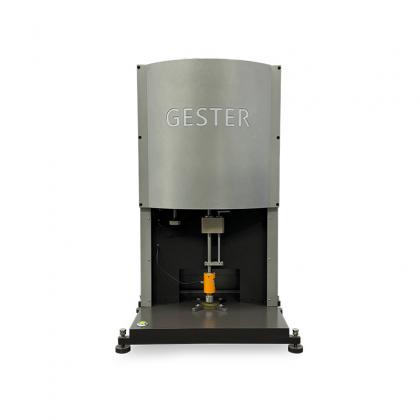
The Taber Abrasion Resistance Test Machine GT‑C14A is a compact single‑station rotary‑platform abrasion tester. It drives two calibrated abrasive wheels against a rotating sample to create an X‑pattern wear path, perfectly simulating multi‑directional surface friction. This tester combines flexible load adjustment and interchangeable abrasive wheels to assess surface wear performance across a broad range of flat materials including rubber, leather, textiles, plastics and coated surfaces.
Understanding the Difference Between DIN Abrasion Tester and Taber Abraser
There are many differences between DIN Abrasion Tester and Taber Abraser in terms of their working principle, specimen requirements, uses, compliance standards, cost and more. We will discuss these differences.
Working Mechanism
DIN Abrasion Tester uses a rotary drum design. The roller surface is fully wrapped with abrasive sandpaper. Under fixed touching pressure and defined contact area, the specimen sits at a 3° inclination angle against the drum surface. As the drum rotates, the sample moves laterally along the roller to generate continuous sliding abrasion force on the test piece.
On the other hand, taber abrasion tester fixes flat specimens onto a rotating turntable. Two weighted abrasive wheels press vertically onto the sample surface. The rotating platform creates a cross‑pattern multi‑directional rubbing wear over the material surface. Operators can select turntable speeds of either 60 rpm or 72 rpm to match different test requirements.
Abrasive Media
DIN Abrasion Tester relies on #60 grit P60 abrasive paper wrapped around the 150 mm diameter wear drum as its standard abrasive medium. Fresh sandpaper must be fitted for each test run to keep test consistency.
Taber Abraser uses interchangeable calibrated abrasive wheels rather than sandpaper. Available wheel types include elastic rubber‑grain wheels such as CS‑10, CS‑10F, CS‑17, and hard ceramic wheels like H‑10, H‑18, H‑22, H‑38. Additional optional wheels such as tungsten‑carbide S‑35 can be selected for special material testing scenarios.
Specimen Requirements
Din abrasion resistance tester requires cylindrical specimens with dimension Ø16.2 mm × thickness 6‑10 mm. It works best for elastic, rubber‑based samples. Flat thin coatings or rigid flat plates cannot get accurate and repeatable results with this instrument.
Taber Abraser is designed exclusively for flat planar specimens. There are no strict limits on specimen thickness as long as the sample maintains a flat mounting surface. It supports diverse flat products ranging from rubber sheets, leather, textiles, plastic coatings to painted surfaces and decorative laminates.
Test Metrics
DIN Abrasion Tester calculates wear performance by measuring specimen mass loss, and further computes volumetric wear loss using specimen density values. The standard total wear stroke for a complete test is set at 40 m travel distance.
Taber Abraser records mass loss, thickness loss, or transmittance change after defined test cycles. Test output reflects surface scuffing and surface layer degradation rather than deep volumetric material removal of bulk rubber samples.
Performance
Regarding performance, DIN Abrasion Tester delivers aggressive continuous sliding grinding wear that simulates heavy friction conditions for rubber materials. The sample holder supports base weight of 2.5 N, with optional add‑on 2.5 N and 5 N weights for adjusting contact pressure. The wear drum runs at 40±1 rpm. This tester excels for comparing bulk rubber compound wear resistance for tires, shoe outsoles and conveyor belts. Even so, it cannot handle non‑elastic flat coated samples effectively.
Furthermore, din abrasion resistance tester body adopts baking paint treatment for easy maintenance. Its digital counter automatically stops equipment after finishing preset wear stroke.
On the other hand, Taber Abraser boasts versatile performance benefits. It provides adjustable wheel load including 250 g, 500 g and 1000 g total load for each abrasive wheel, by combining abrading‑arm self‑weight with added steel weights. It simulates moderate multi‑directional surface scuffing wear. Its LCD counter supports up to 999 999 cycles.
Although both testers measure abrasion durability, DIN Abrasion Tester is the better choice for heavy‑duty bulk rubber wear testing, while Taber Abrasion Resistance Tester performs better for surface‑focused wear assessment of flat multi‑material samples. Particularly in quality‑control labs testing mixed flat‑product portfolios, Taber Abraser offers wider material adaptability.
Compliance Standards
DIN Abrasion Tester complies with ISO 4649, ASTM D5963, BS 903, DIN 53516, JIS‑K6369, GB/T 20991 section 8.3, GB/T 9867, EN ISO 20344‑2021 section 8.3 and related footwear‑rubber industry standards.
Taber Abraser meets international standards including ASTM D4060, ASTM D3884, ISO 5470‑1, DIN 53109, JIS K7204, SATRA TM163 and many other standards for coatings, leather, textile and plastic testing work.
Industrial Applications
DIN Abrasion Tester GT‑KB03 is widely applied across rubber‑related industries. First, footwear manufacturing uses it for outsole rubber material wear‑resistance verification. Tire factories test various rubber tire compounds. Conveyor‑belt manufacturers evaluate belt rubber quality. It is also used for R&D and incoming‑material inspection of all kinds of vulcanized rubber and elastomer materials. It serves as indispensable quality‑assurance equipment for rubber factories and footwear labs worldwide.
Taber Abrasion Resistance Tester GT‑C14A serves multiple industry sectors. It tests leather, textiles, suitcase shell surfaces, floor mats, plastic and metal surface coatings, paint and varnish layers, automotive interior decorative parts, furniture surface finishes, tile anodizing layers and electronic‑component outer surfaces. Footwear labs can also test flat rubber sheet surface performance, though not for thick three‑dimensional rubber sole volumetric wear assessment.
Physical Specifications
Din abrasion testing machine GT‑KB03 has dimension 700 × 300 × 300 mm with total weight of 55 kg, powered by single‑phase AC 220 V 50/60 Hz 3 A supply.
Taber Abraser GT‑C14A is compact sized at 44 cm × 37 cm × 27 cm and weighs only 20 kg. It uses AC220V 50/60Hz power input, easy to deploy on standard laboratory benches.
Uses
DIN Abrasion Tester is usually ready for immediate use without complicated pre‑test modification for rubber‑sample projects. It measures volumetric rubber loss under heavy sliding friction. It helps engineers compare different rubber formulations and screen high‑wear‑resistant elastomer materials. Test results reflect real‑world heavy‑abrasion scenarios such as rubber contacting rough road surfaces. It cannot deliver valid test outputs for thin flat coating layers.
Taber Abraser offers great flexibility for multi‑material QC work. Users can swap abrasive wheels and adjust test loads to match different flat‑product specifications. It evaluates surface degradation, scratching and scuff resistance. It is formable for varied flat‑sample test requirements, helping manufacturers verify surface durability for finished consumer goods.
DIN Abrasion Tester or Taber Abraser: Which is Better?
Both DIN Abrasion Tester and Taber Abraser have their distinct properties. Although each tester has its pros and cons. Din abrasion testing machine’s heavy‑load continuous‑sliding mechanism gives it strength for bulk vulcanized‑rubber volumetric wear measurement, especially for shoe soles, tires and conveyor‑belt rubber.
Therefore, DIN Abrasion Tester is a better option if your primary focus is testing bulk rubber and elastomer wear performance. However, DIN Abrasion Tester does not work well for flat coatings, painted layers or non‑rubber flat finished products, hence it is not ideal for multi‑material surface‑wear QC labs.
Taber Abrasion Resistance Tester excels for multi‑material flat‑sample surface‑abrasion testing. It supports leather, textile, plastic, paint, coating and flat rubber sheet assessment. Even so, Taber Abraser cannot reliably reproduce heavy sliding volumetric wear for thick three‑dimensional rubber specimens.
Factor
|
DIN Abrasion Tester
|
Taber Abraser
|
Abrasion Principle
|
Rotary drum with wrapped P60 sandpaper, continuous sliding grind
|
Rotary turntable with dual calibrated abrasive wheels, cross‑pattern surface rubbing
|
Specimen form
|
Cylindrical elastic rubber specimen Ø16.2 mm
|
Flat planar sample of various materials
|
Primary test output
|
Volumetric / mass loss of bulk rubber
|
Surface‑related mass loss, thickness loss or transmittance change
|
Load configuration
|
2.5 N base holder weight, optional 2.5 N / 5 N add‑on weights
|
250 g / 500 g / 1000 g per wheel via combined steel weights
|
Standards
|
ASTM D3884, ASTM D1175, ASTM D1044, ASTM D4060, ASTM D4685, ISO 9352, DIN 52347, DIN 53109, DIN 53754, DIN 53799, JIS K7204, JIS A1453, JIS K6902, JIS L1096, JIS K6964, TAPPI T476, ISO 9352, ISO 5470-1, SATRA TM163
|
DIN-53516, JIS-K6369, JIS K6264-2,GB/T 20991 section 8.3,GB/T 20265, GB20266-2006, GB/T 9867, EN ISO 20344-2021 section 8.3, AS/NZS 2210.2 section 8.3, ISO 4649, BS903-A9 Method A, ASTM D5963, ISO20871, QB/T2884, EN 12770
|
|
Application
|
Bulk vulcanized rubber, tire, shoe outsole, conveyor‑belt rubber
|
Flat finished goods, surface coating, leather, textile, plastic panels
|
The better choice is application‑specific. Specify the governing test standard, specimen geometry, required load settings, target material types, QC workflow and warranty conditions.
DIN Abrasion Tester & Taber Abraser FAQs
Can DIN Abrasion Tester replace Taber Abraser for coating wear testing?
No. DIN Abrasion Tester is designed for cylindrical bulk rubber specimens. Thin flat coatings cannot be mounted properly, and its heavy sliding grinding mechanism will destroy coating layers in ways unrelated to real‑world coating surface wear. Coating wear tests should follow Taber Abraser‑relevant standards.
Which tester is better for formed rubber shoe‑sole parts?
It depends on your test objective. Use DIN Abrasion Tester when you need volumetric wear‑loss data of bulk sole rubber compound. Choose Taber Abrasion Resistance Test Machine only if you need to test surface scuff resistance of flat sections of finished shoe‑sole sheets. Validate tests with representative real samples rather than selecting equipment by name alone.
Conclusion
DIN Abrasion Tester and Taber Abraser may differ in terms of their working mechanism, specimen requirements, performance, applicable standards and use‑cases, but their usage depends on the requirements of the intended test project. However, din abrasion testing machine’s targeted design for vulcanized rubber volumetric abrasion makes it a highly‑preferred option for rubber‑focused footwear and tire labs, while Taber Abrasion Resistance Test Machine’s multi‑material versatility makes it widely adopted for flat‑product surface‑wear quality control.




 español