Llama a+ 86 018059983973
Envíenos un correo electrónicomarketing@gester-instruments.com

We take samples per the product standard, or by buyer‑supplier agreement. Without such provisions, sampling shall follow the annex of NWSP 090.1.R0 (20). Prepare test strips both in machine direction (MD) and cross direction (CD) of nonwoven fabric. Multiple replicates shall be prepared for each test direction.
Calculation and presentation of results
Calculate the mean value and the coefficient of variation (to the nearest 0.1%) of measured overhang length for each direction.
Calculate the bending length, flexural rigidity and bending modulus R using standard formulas. Trim the result according to apparatus measuring precision.
Calculate the 95% confidence interval for stiffness indicators. Use the same units and precision as in calculation requirement. Separate calculation results for machine direction and cross direction.
What equipment is used for NWSP 090.1.R0 (20) Test Method?
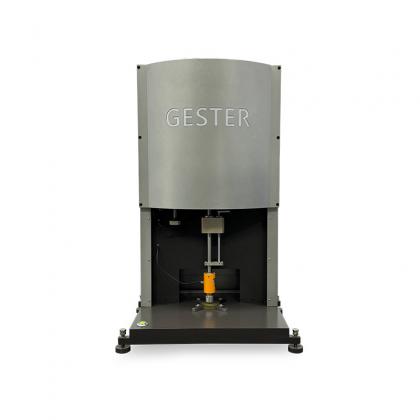
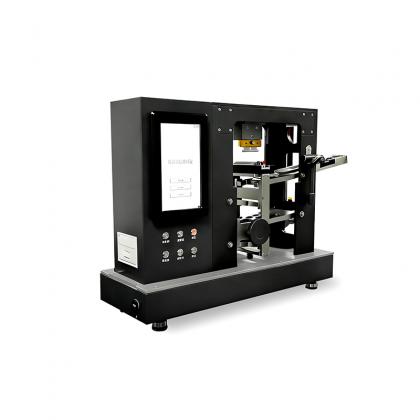
GESTER GT‑C70A Full‑Automatic Fabric Stiffness Tester lets you quickly get reliable fabric stiffness test results. It is a smart cantilever‑style stiffness test apparatus. This stiffness tester is for many textile materials. These include woven fabrics, knitted fabrics, general non‑woven fabrics, coated fabrics, as well as paper, leather, thin‑film flexible materials.
Our fabric stiffness meter is applicable to ZB WO4003, GB/T18318, ASTM D 1388, ISO 9073‑7, BS EN22313, NWSP 090.1.R0 (20), etc.
GT‑C70A Full‑Automatic Fabric Stiffness Tester vantage point
Tests are easy and fast.
The Fabric Stiffness Tester is easy to use. You can select the stiffness test standards and output units from the operation screen. Our GT‑C70A fabric stiffness tester can complete pushing, detecting bending point, reading length and result calculation automatically. You only need to place prepared specimen strips and start the test to get full set of stiffness results for MD and CD.
The specimen strip slides forward on horizontal platform. Its front end hangs out and bends downward under self‑weight. When tip reaches the 41.5‑degree reference plane, the instrument captures overhang length and computes bending‑related stiffness parameters.
More reliable stiffness test results
The sensing and detection components of this fabric stiffness tester are innovative. They are maintenance‑free and have low wear loss. They bring high repeatability and reliability to stiffness testing results.
The core components are high‑quality. They include high‑precision length detecting sensors from famous brands. These parts further ensure the accuracy of fabric stiffness test results.
Smart Fabric Stiffness Testing
Our GT‑C70A automatic fabric stiffness tester can connect with peripheral data management system. Test orders and sample info can be imported. The instrument can record all related data, including test results of each replicate.
The system will then summarize these into fabric stiffness test report. Relevant parties can view the report data. The tester stores complete historical test data. It supports data export for laboratory quality management.
Stable mechanical design, quality‑oriented performance
We developed our textile testing equipment in‑house. Optimized mechanical transmission reduces extra disturbance to specimen movement. Stable hardware guarantees long‑term consistent test performance.
Other Stiffness Test Standard
ASTM D 1388: Standard Test Method for Stiffness of Fabrics.
NWSP 090.1.R0 (20): Stiffness of Nonwoven Fabrics Using the Cantilever Test.
ISO 9073‑7: Nonwovens — Test methods — Part 7: Determination of bending length.
GB/T18318: Textiles‑Determination of bending length of fabrics.
BS EN22313: Textiles‑Determination of bending length.
ZB WO4003: Test method for fabric stiffness.
Follow these steps and the relevant standards. Then, you can get reliable and reproducible stiffness measurements for various flexible materials.
NWSP 090.1.R0 (20) has the following advantages over other standards:
NWSP 090.1.R0 (20) is specially designed for nonwoven fabrics, covers untreated, coated and resin‑treated nonwoven products, has a wide range of applications. Test results show high correlation with ISO 9073‑7 and GB/T18318. This means the NWSP 090.1.R0 (20) standard aligns well with other international standards.
Standardised test methods: NWSP 090.1.R0 (20) provides unified cantilever test procedure for nonwoven materials. It ensures comparable test results between different labs and manufacturers. This standardisation is important to ensure nonwoven product quality and global trade control.
High correlation: Test data under NWSP 090.1.R0 (20) and ISO 9073‑7 show high consistency. Thus, NWSP 090.1.R0 (20) agrees with other international stiffness test methods in test results.
NWSP 090.1.R0 (20) focuses on nonwoven industry demand. Its testing rules take anisotropic property (machine direction / cross direction) of nonwoven fabrics fully into consideration.
For more information on nonwoven fabric testing methods or nonwoven fabric testing machines, contact us.


Enlaces amigables :
 español