Llama a+ 86 018059983973
Envíenos un correo electrónicomarketing@gester-instruments.com

Cómo elegir la máquina de prueba de cremalleras adecuada
Probador de cremalleras por tipo de prueba
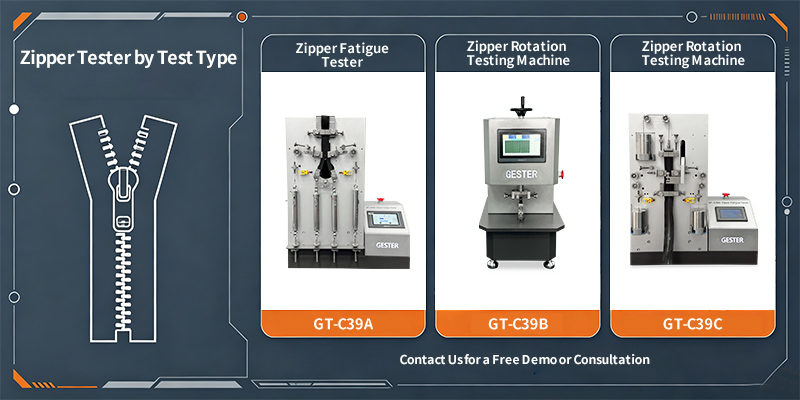
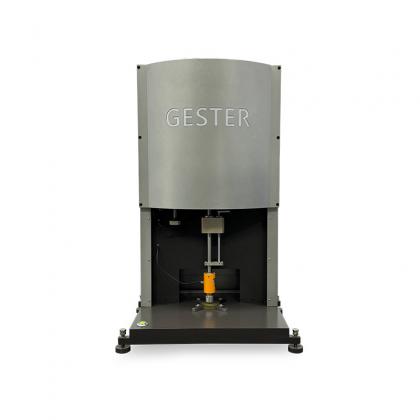
Para comprender realmente la gama de probadores de cremalleras, es importante dividirlos en diferentes clases. La clasificación principal se basa en el tipo de prueba que realiza la máquina, y aquí tenemos lo siguiente:
5. Las unidades de par de prueba se pueden cambiar entre cN·m y Nm directamente en la máquina.
Parámetros a considerar antes de comprar una máquina de prueba de cremalleras
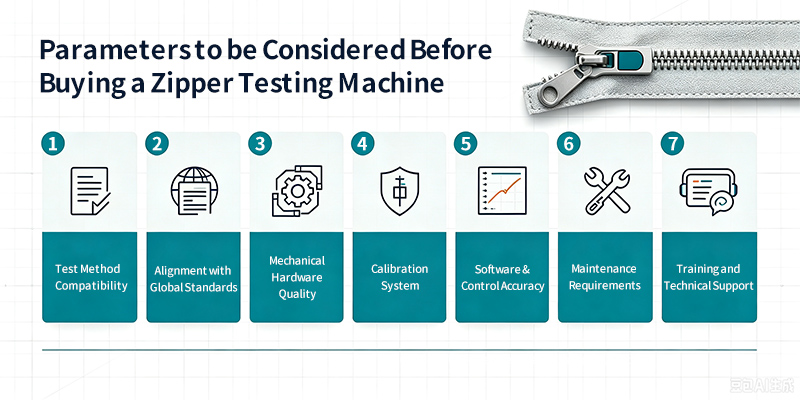
Las máquinas de prueba de cremalleras se han convertido en herramientas de laboratorio esenciales para la mayoría de las empresas fabricantes de textiles y cremalleras. Un equipo inadecuado puede perjudicar la reputación de la marca, obstaculizar el proceso de certificación y aumentar los costos generales de las pruebas.
Compatibilidad de métodos de prueba
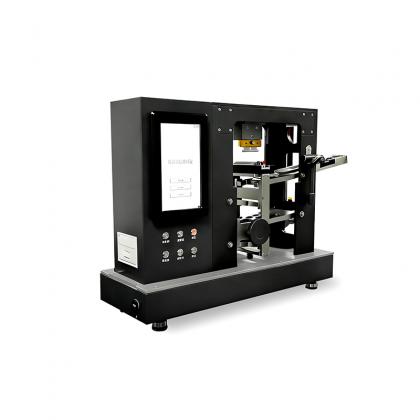
Confirme si la máquina admite los tipos de prueba que necesita: prueba de fatiga recíproca o prueba de torsión del tirador. Los probadores recíprocos evalúan la separación de las juntas, la holgura, la falla del conector, la pelusa y el desgaste. Los probadores de rotación realizan evaluaciones de resistencia a la torsión de los tiradores de cremallera, tanto a ángulo constante como a carga constante.
Alineación con los estándares globales
ElProbador de resistencia de cremallerasDebe realizar pruebas siguiendo los estándares del mercado objetivo. Debe admitir pruebas multiestándar como SATRA TM50 Método 1/Método 2, ASTM D2061, 16CFR 1500.51-53, EN 16732, CNS-1083, BS 3084, QB/T2171, DIN 3419-1. El cálculo manual genera errores evitables y puede distorsionar el rendimiento real de la cremallera.
Calidad de los componentes mecánicos
Compruebe los conjuntos de accionamiento alternativo y las unidades reductoras de torsión. En los probadores de rotación, los reductores de bajo ruido garantizan un funcionamiento suave y silencioso. Los soportes de torsión de acero inoxidable ofrecen una larga durabilidad para el montaje repetido de muestras.
Sistema de calibración
Las máquinas con funciones de calibración fiables reducen la deriva de la medición. Totalmente automático.Probador de resistencia de cremallerass deben mantener la producción mecánica dentro de rangos de desviación aceptables durante un funcionamiento prolongado.
Software y precisión de control
El software de control de la pantalla táctil debe implementar correctamente los algoritmos de prueba definidos por estándares. En los equipos de prueba de torsión, la conmutación de unidades entre cN·m y N·m debe funcionar con precisión. Confirme que el software del probador de cremalleras cumple con las especificaciones estándar internacionales para reducir la variabilidad del sistema.
Requisitos de mantenimiento
Las principales actividades de mantenimiento incluyen:
- Inspección periódica de los conjuntos mecánicos de transmisión y torsión.
- Limpieza de todos los dispositivos de prueba
- Inspección de sensores y detectores de conteo
- Calibración anual completa del equipo
Estas tareas de mantenimiento son especialmente importantes para los laboratorios de alto volumen que analizan grandes lotes de muestras de cremalleras de prendas de vestir, equipaje y productos para actividades al aire libre.
Capacitación y soporte técnico
Para garantizar un funcionamiento estable a largo plazo de los instrumentos y una mayor vida útil en entornos de laboratorio, se requiere formación profesional para los operadores y asistencia técnica continua.
Contáctanos para una demostración o consulta gratuita.
Para obtener más información sobre los métodos de prueba de cremalleras, las normas globales yMáquina de prueba de cremallerass, contáctenos:
- Correo electrónico: marketing@gester-instruments.com


Enlaces amigables :
 español